
Wedding cold sparks 101 — what every couple should know before booking
They look like fireworks. They aren't. Here's what cold-spark fountains actually are, what venues think of them, and when to skip them entirely.
Cold-spark fountains have become the most-requested production add-on of the last three wedding seasons. Couples want the photo. Wedding planners want the moment. Venue coordinators sometimes want them gone.
Here's the actual truth about cold sparks — what they are, what they need, and when to use them.
They're not fireworks
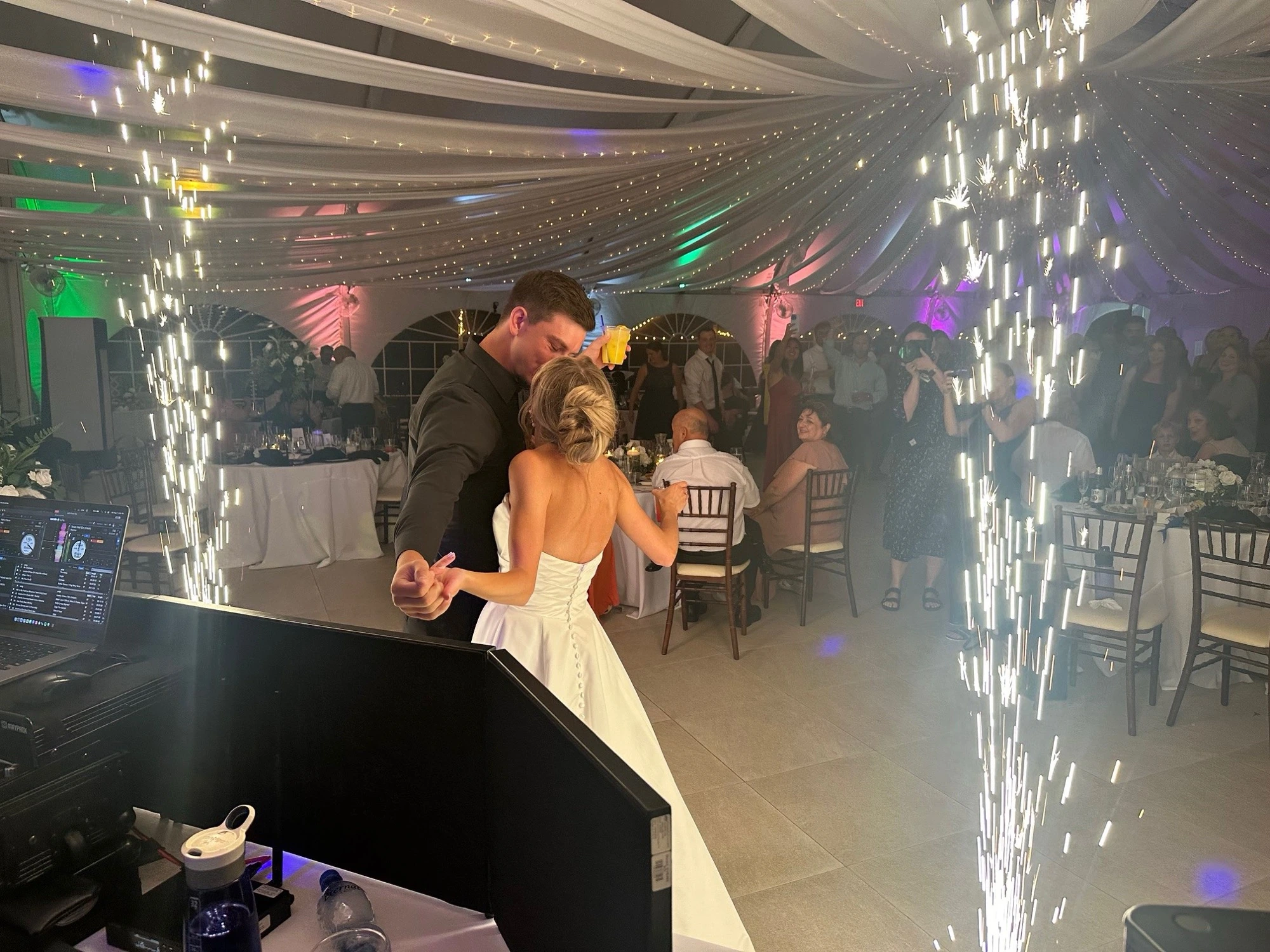
Cold sparks are produced by a small machine that ignites a granulated alloy — usually titanium or a non-pyrotechnic substitute. The result is a 6–10 foot column of bright sparks that lasts 20–40 seconds per cartridge.
The "cold" part is real: the sparks themselves are around 130°F when they leave the column, cool enough to safely contact skin or fabric for a brief moment. (Don't lean over them, though.)
What every venue asks before approving
Most venues will approve cold sparks for first dances and grand entrances. A few will not. The ones that hesitate usually want answers to:
- Ceiling height — we need at least 10 feet of clearance above the machines.
- Smoke detector type — photoelectric detectors don't trigger on cold sparks; ionization detectors can. Older buildings often have ionization.
- Insurance — Crow carries production liability that covers cold sparks. We'll send the venue our certificate before event day.
- Operator — a trained Crow tech runs the machine. The machines don't fire themselves.
Not all machines are equal — and the cheap ones are a real risk
The machine matters far more than couples realize. Budget units bought online and run by whoever has the cheapest quote burn hot, throw inconsistent columns, and damage things — we've been called in after events where a discount rig left scorch marks on linens, dresses, and a dance floor. "Cold" only holds true when the alloy, the load, and the operator are all right. Cut a corner on any of the three and you get a burn, not a photo.
Crow runs top-of-the-line cold-spark units, calibrated and operated by a trained tech with a measured safety zone every single time. So if the only cold sparks available for your date are a bargain add-on from someone who can't tell you the spark temperature or show you an insurance certificate, skip them entirely. The shot is never worth the risk of a cheap machine.
When to skip cold sparks
Three more situations where we'll recommend against them:
- Tented receptions with low ceilings — the visual is muted, and tent fabric near the column makes us nervous.
- Venues with old smoke-detection systems — even if photoelectric, age and dust can mis-trigger.
- Outdoor first dances during dry season — when fire bans are active, cold sparks are usually fine technically but optically poor.
The shot you actually want
The classic shot is two cold-spark columns flanking the couple during their first dance. We position them about 8 feet behind the couple, angled slightly inward, with a 6-foot safety zone in front. The photographer shoots from across the dance floor with a wider lens than they usually would — the spark cone looks better with breathing room.
We plot cold-spark placement during the venue walk-through, never on event day. If you're booked with Crow and curious whether your venue is a fit, the answer is in our pre-event venue notes — ask your coordinator.